Is a submeter enough? Billing vs leak protection
A billing submeter counts water, it does not act on what it sees. What a submeter does well, where it stops and how to pair metering with leak detection, automatic shutoff and 24/7 monitoring.

A submeter alone is not enough to protect a building.
A billing submeter counts water, it does not act on what it sees. It measures each unit's use for fair billing and reporting, but when a pipe fails at 2 a.m. it records the loss and waits for the next billing cycle to surface it. The water keeps running until someone wakes up. To stop the damage, pair metering with leak detection, an automatic shutoff valve and 24/7 monitoring.
What a submeter does, and what it does not do
A water submeter measures consumption at the unit, riser or zone level instead of relying on one building-level meter. That gives property teams accurate per-unit data, so you can bill fairly, allocate costs, run conservation programs and meet reporting requirements without arguing over the building-level number. Done well, submetering also makes residents aware of their own use, which tends to bring consumption down. For the full primer, see what is water submetering.
What a read-only submeter does not do is act. It has no way to tell a normal high-use morning from a burst supply line. It does not call anyone. It cannot close a valve. The data is real and useful, but it is a record after the fact, not a response in the moment. That gap is why Eddy pairs metering with a 24/7 monitoring center whose operators call your contacts within minutes of a leak alert. A meter that only counts is blind to the one event that turns a water bill into an insurance claim.
What "enough" means for a multifamily owner
For a multifamily owner, enough is not measured in meter accuracy. It is measured in avoided claims, protected units and nights without the 2 a.m. call. Water damage is one of the most frequent and costly loss categories in multifamily. The average water-related claim exceeds $55,000 in large urban multifamily buildings per the Eddy 2026 State of Water Risk Report, and most leaks run long before anyone reacts, so the gap that drives the claim is response time, not detection.
The real question is not "do I have data on every unit?" It is "when a unit fails, how fast does someone find it and stop it?" A billing-only submeter answers the first question and leaves the second one open. With Eddy, a leak alert reaches the 24/7 monitoring center in seconds and operators escalate and call your contacts within minutes. The benchmark is 02:00 minutes from a leak alert to taking care of the problem. Enough means the same network that meters your units also detects the leak and shuts off the water before it reaches the unit below. Enough is metering plus leak protection on one system, not metering on its own.
One network for billing and leak protection
Eddy does not replace your submetering company and Eddy does not bill your residents. Eddy feeds your submetering and billing platform the interval data it needs through M-Bus or an API, then adds the leak protection a meter alone cannot provide.
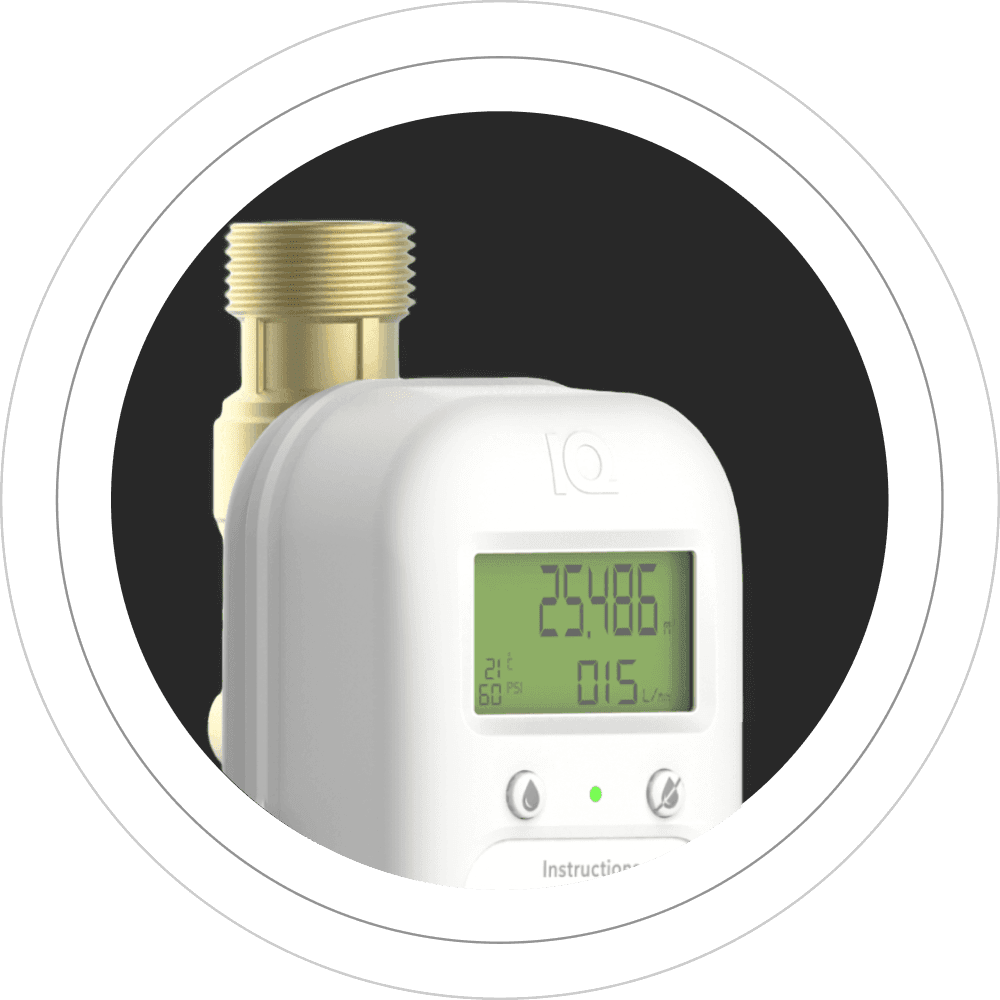
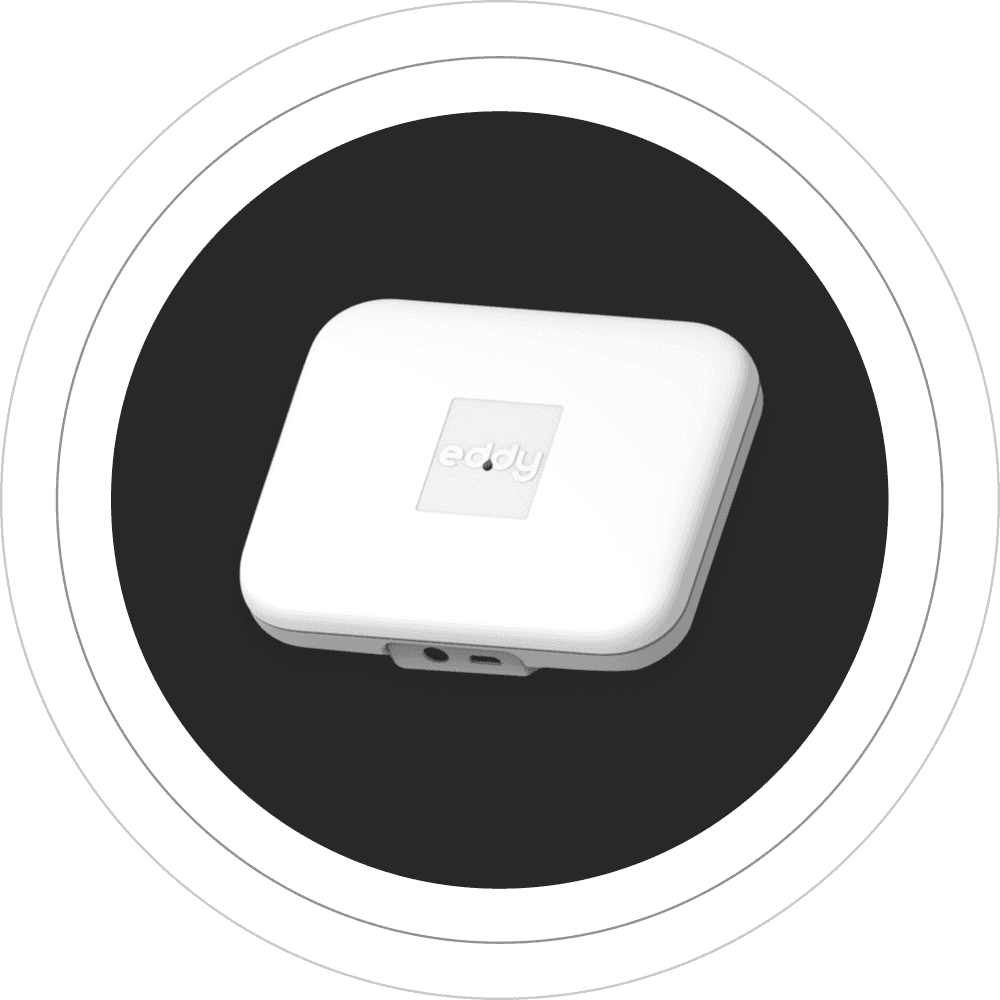
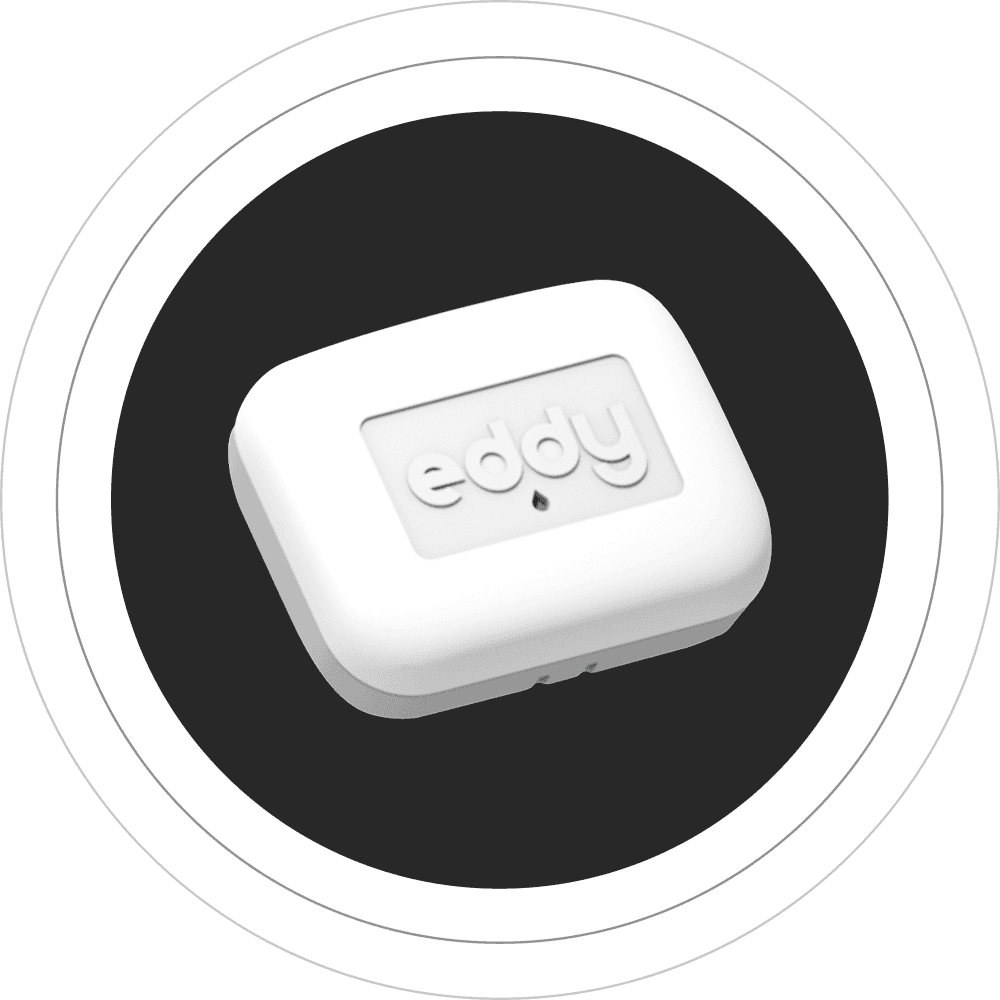
Eddy IQ is an all-in-one flow meter and automatic shutoff valve at each unit's point of entry. It records interval consumption for billing and it watches flow for the signatures of a leak. When it finds one, it can shut off the water at the unit, and the alert goes to Eddy's 24/7 monitoring center, where operators escalate and call your contacts within minutes. Operators work from your building's system map and the response rules you set, so the right person hears about the right leak. For the larger lines, Eddy Link reads the meters and drives motorized shutoff valves up to 18 inches, all provisioned and configured by Eddy, in new construction and retrofit alike. Both feed the same Eddy Dashboard, so your team sees billing data and leak alerts in one place instead of reconciling two systems. One network meters every unit, sees every unit and can stop water at the unit, the zone or the whole building.
The documented response history also supports your insurance case. An Aon whitepaper found the Eddy system would have positively affected 58% of the water-loss claims it studied. That history can support premium savings of up to 20%, with deductible reductions of up to 80% documented at individual properties, and Eddy detects, pinpoints and stops leaks up to 100x faster than traditional methods.
A submeter that only counts water still lets the 2 a.m. burst flood the unit below. Pairing metering with leak detection, an automatic shutoff valve and 24/7 monitoring, as Eddy does across 150,000+ devices in large buildings today, means the same network that bills your units also protects them. That is peace of mind you can document.
See how per-unit metering and leak protection work together on the water submetering page and how it fits apartments and condos on multi-family.
Want submetering that protects, not just bills? No re-piping and no need to switch your billing vendor. Talk to a leak-detection advisor.
Common questions
Can a submeter detect leaks?
Not on its own. A billing submeter records how much water passed through it, so your meter can tell you that you had a leak after the fact, as a higher number on a later report. It cannot tell a burst supply line from a long shower while it is happening, it cannot call anyone and it cannot close a valve. Catching a leak in the moment takes a meter that watches flow continuously, paired with an automatic shutoff valve and 24/7 monitoring.
Is a submeter enough on its own?
For billing and reporting, yes, a submeter does its job. For protecting the building from water damage, no, because it records the loss without stopping it. Pairing metering with leak detection, automatic shutoff and 24/7 monitoring closes that gap.
Do I have to switch submetering vendors to add leak detection?
No. Eddy works alongside your existing submetering and billing setup. Eddy shares the same interval consumption data your vendor already uses through M-Bus or an API, and layers leak detection, automatic shutoff and 24/7 monitoring on top.
Does adding leak detection mean re-piping the building?
No. Eddy IQ installs at the unit's point of entry, and Eddy Link reads the larger meters and drives the larger valves, so the system fits new construction and retrofits without re-piping. Eddy provisions and configures the valves and meters.
Sources and further reading
Last Updated
Category
Related articles
Browse all posts
Water management
What is water submetering? A guide for property teams
By The Eddy team
Read article
Product & technology
Improve water use and save costs with suite metering
By Elliott Samuel
Read article
Insurance & risk
Rising condo insurance, how water risk mitigation can help
By Shkya Ghanbarian
Read article