Why water pressure problems become leaks in large buildings
Worn PRVs, water hammer and waterlogged expansion tanks quietly overpressure building plumbing. What the signs mean and how 24/7 monitoring catches them.

Most water pressure problems in large buildings trace back to three components: a pressure reducing valve drifting out of spec, water hammer fatiguing pipe joints and an expansion tank that has quietly failed. Each one adds stress to every pipe, valve and fixture downstream. Left alone, pressure problems do not stay pressure problems. They become leaks, and Eddy's 2026 State of Water Risk report found pipe leaks in multi-unit residential buildings average $111,600 in damage.
What a pressure reducing valve does in a large building
Municipal mains deliver water at pressures far above what building plumbing is designed to live with. Street pressure commonly runs 100 to 150 psi, and in a high-rise the booster pumps push it higher still to reach the upper floors. A pressure reducing valve, the PRV, sits at the service entrance and again on each pressure zone, dropping supply to a working range of roughly 50 to 80 psi. Taller buildings stack several zones, each with its own PRV station, and critical stations often run two valves in parallel so one can be serviced without shutting down the riser. Every fixture, appliance connection and valve in the building depends on those spring-loaded devices holding their setting.
PRVs fail slowly and quietly. Debris scores the seat. The diaphragm stiffens or tears. The spring drifts. A worn PRV lets downstream pressure creep up over months, and because the creep is gradual, nobody notices until the symptoms arrive: fixtures dripping on multiple floors, relief valves discharging and a valve leaking at its packing nut. A PRV that fails open passes full street pressure into piping rated for far less.
Water hammer: what the banging means
Water hammer is a pressure shock wave. When a fast-closing valve or a stopping pump brings moving water to a sudden halt, the momentum has to go somewhere. For a fraction of a second the spike can reach several times the system's working pressure. The bang you hear is the pipe jumping in its hangers.
One event does little. Thousands of events fatigue solder joints, loosen mechanical fittings, hammer valve seats and crack the small parts first: gauges, flexible connectors and fixture supply lines. Many buildings file banging pipes under comfort complaints. Treat the noise as an early warning instead. Water hammer in pipes gets worse as static pressure rises, and arrestors that have failed or waterlogged stop absorbing the shock. Persistent banging usually points straight back at a pressure problem.
Expansion tanks: the quiet failure
Backflow preventers and check valves make a modern building's water system closed. When boilers and water heaters heat that water it expands, and in a closed system the expansion has nowhere to go. The expansion tank absorbs it behind a rubber bladder pressurized with air. When the bladder fails, the tank waterlogs and every heating cycle drives system pressure against the relief valve instead. An expansion tank leaking from its shell or fittings usually means the bladder is already gone. The tell is a pressure gauge that swings widely between heating cycles and a relief valve that weeps in rhythm with them. Boiler rooms deserve the attention: Eddy's 2026 State of Water Risk report found 1 in 23 boiler sensors in multi-unit residential buildings recorded a leak, the highest per-sensor rate of any source.
Why pressure problems become leaks
Pressure is a multiplier on every weak point in the building. Gaskets, seals, valve packing, fixture cartridges and braided supply lines across hundreds of suites are rated for normal working pressure, not for sustained over-pressure or repeated shock. High water pressure in a building accelerates pinhole corrosion, pushes marginal joints to failure and shortens the life of every appliance connection at once.
The damage rarely surfaces where the cause lives. A burst supply line on the 14th floor can trace back to a PRV at grade that drifted 30 psi over two years. That is why pressure-driven leaks look random and unrelated. They are not. They are one failure expressing itself through the building's weakest points, one at a time.
How 24/7 monitoring sees pressure failure coming
Pressure-driven failure has a flow signature long before it has a flood. A weeping relief valve shows up as low continuous flow that never returns to zero overnight. Multiplying fixture leaks lift the building's baseline consumption week over week. Continuous leak detection reads those patterns up to 100x faster than waiting for a stain to appear, and Eddy's monitoring center confirmed and actioned 2,557 water events in 2025 with response measured in minutes rather than hours.
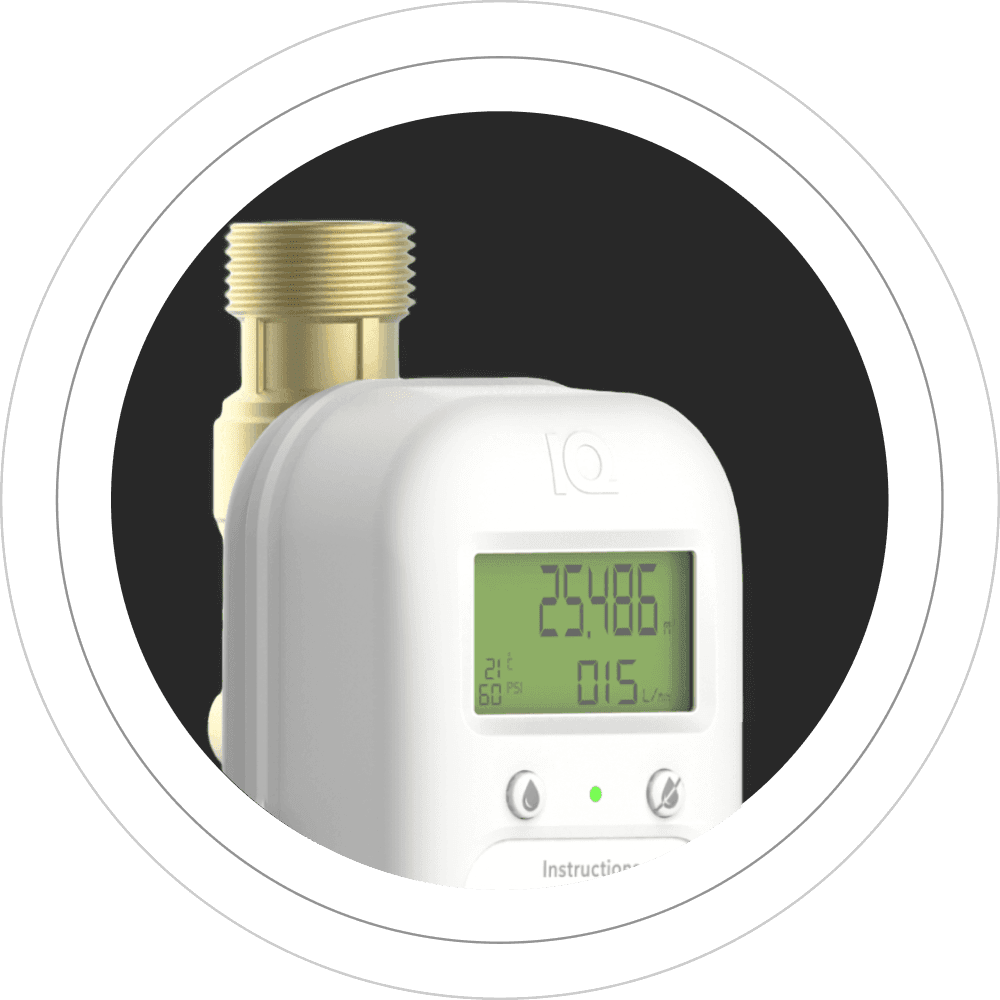
In an Eddy-protected building, Eddy Link reads the meters and drives the larger valves while Eddy IQ covers individual lines, so an abnormal flow pattern can trigger an automatic shutoff at the main or at the zone. Trends surface in the Eddy Dashboard, where a slow upward drift in overnight flow is visible months before a joint lets go. When a water leak alert fires, the 24/7 monitoring center escalates and calls your contacts within minutes, with operators working from your building's system map and business rules. In commercial buildings, Aon's independent study found the Eddy system would have positively affected 58% of the water-loss claims it studied.
Banging pipes, weeping relief valves and creeping gauge readings are the building asking for attention. Give it a system that listens around the clock. Talk to a leak-detection advisor.
Common questions
What is a pressure reducing valve?
A pressure reducing valve, or PRV, is a spring-loaded valve that drops incoming water pressure to a safe working range for a building's plumbing, typically 50 to 80 psi. Large buildings install PRVs at the water service entrance and on each pressure zone in high-rise risers. PRVs wear gradually, and a failed PRV lets full supply pressure reach pipes, valves and fixtures rated for much less.
Why do my building's pipes bang?
Banging pipes are usually water hammer, a pressure shock wave created when fast-closing valves or stopping pumps bring moving water to a sudden halt. The noise means the piping is absorbing repeated mechanical shock, which fatigues joints, valves and fixture connections over time. Persistent water hammer often signals high system pressure or failed arrestors, both worth investigating before a joint or supply line lets go.
What causes high water pressure in a building?
The most common causes are a worn or failed pressure reducing valve, booster pumps set higher than the zone requires and thermal expansion trapped in a closed system with a failed expansion tank. A change in municipal supply can also raise street pressure. Because pressure creeps up gradually, buildings usually discover it through symptoms such as dripping fixtures, weeping relief valves and recurring leaks.


Last Updated
Category
Related articles
Browse all posts
Water management
Riser rooms and water risers: the vertical spine of your building's water risk
By Adam Bartman
Read article
Water management
Burst and frozen pipes in commercial and multifamily buildings: what the first 10 minutes decide
By Adam Bartman
Read article
Multi-family
Appliance leaks in multifamily buildings: one suite's dishwasher is three floors of damage
By Adam Bartman
Read article