Mechanical room leaks: why the building's water hub fails after hours
Boilers, booster pumps and closed loops concentrate a building's water risk in one room. How mechanical room leaks start and why monitoring catches them.

Every drop of water a building uses passes through the mechanical room or the mechanical penthouse. Boilers, booster pumps, recirculation pumps, heat exchangers and closed loops share one space, stacked above or beside everything the building cannot afford to soak. When something in that room lets go, it is rarely during business hours. Eddy's 2026 State of Water Risk report found 59% of 2,557 confirmed water events across all building types happened after hours.
The building's water hub
A typical mechanical room holds the domestic hot water plant, a water booster pump set lifting city pressure to the upper floors, hot water recirculation pumps keeping the risers charged, heat exchangers moving heat between systems, closed loop piping for heating and cooling, expansion tanks and backflow preventers. Some buildings add a rooftop water tank for gravity supply. In many high-rises this equipment sits in a mechanical penthouse on the roof, which is efficient for pipe runs and unforgiving for leaks: water released at the top of a building can reach every floor below it. A penthouse also shares the roof level with elevator machinery, so escaping water finds critical equipment before it finds a drain. The largest plants of all run in hospitals, universities and other institutional buildings and in industrial facilities, where a mechanical failure also threatens research, production or patient care.
Why after-hours failures cascade
A mechanical room failure at 3 a.m. gets hours of free run. Eddy's 2025 monitoring data recorded 132 leaks between midnight and 5 a.m., 29 of them major. Floor drains are sized for nuisance water, not for a blown pump seal passing a steady stream, and they clog. Escaping water finds shafts, risers and conduit penetrations, then the electrical room, the elevator machine room and finished space below. The equipment keeps helping the leak along. A booster pump will keep pushing city water through a burst fitting all night, and an automatic makeup line will quietly refill a leaking loop for weeks. By morning rounds, a failed fitting has become a multi-floor loss. Time, more than flow rate, is what makes mechanical spaces dangerous, and mechanical rooms spend most of every week unattended. Between the evening walkthrough and the morning shift, the space goes 10 hours or more without a human eye on it. A long weekend stretches that to days.
Which equipment fails, and how
Boilers fail at gaskets, relief valves and sections, and Eddy's 2026 State of Water Risk report found they carry the highest per-sensor leak rate of any source in multifamily buildings, one leak for every 23 sensors. A boiler leaking water often turns out to be the relief valve discharging under excess pressure, which points at an expansion or pressure problem elsewhere in the system. Booster pump and recirculation pump mechanical seals weep before they blow, and because a hot water recirculation pump runs around the clock, its seals wear around the clock too. A heat exchanger leak tends to hide inside insulation or show up only as pressure loss on one loop, small, persistent and corrosive to everything nearby. A closed loop water system should need almost no makeup water once filled, so continuous makeup flow means the loop is bleeding somewhere out of sight, often above a ceiling or below grade. A rooftop water tank fails at its float valve and seams, sending overflow down through the penthouse and into the shafts below.
Sensor placement in mechanical spaces
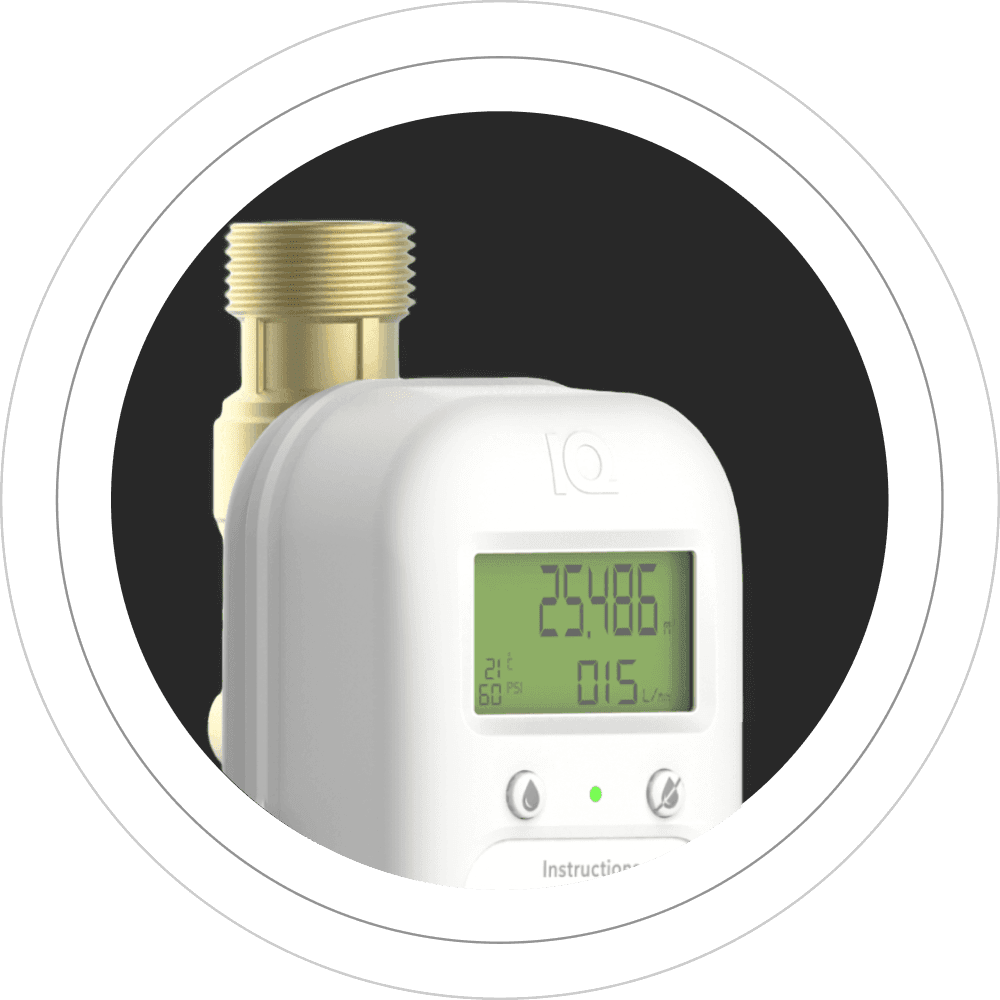
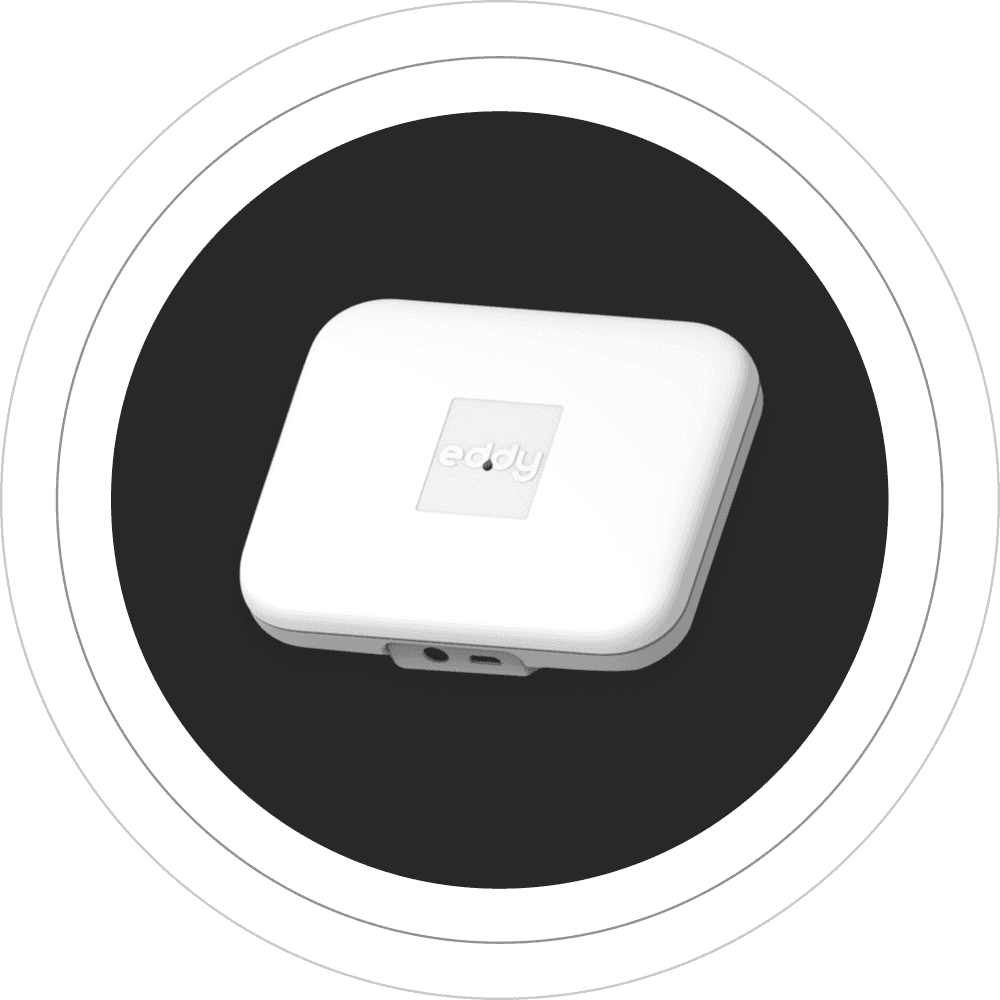
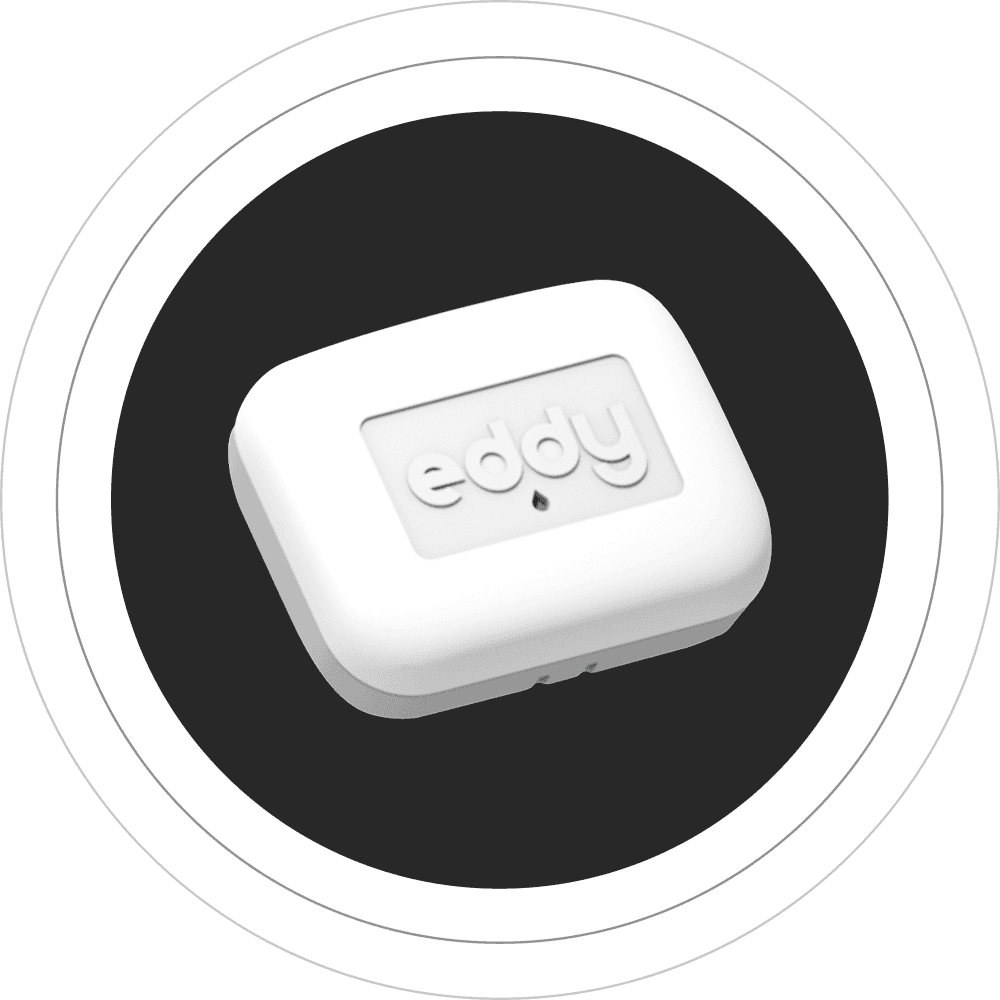
Coverage follows the failure paths. Eddy H2O wireless leak sensors go under pump seals, beside boiler relief discharge piping, in heat exchanger drip pans, along tank overflow routes and at the floor drain, the low point every escaping stream eventually crosses. Eddy IQ, the all-in-one sensor, watches flow on the line it protects and can close it with an automatic shutoff. Eddy Link reads the building's meters and drives the larger valves, which turns the makeup line into a diagnostic: flow where there should be none is the earliest sign of a closed loop leak. Everything reports into the Eddy Dashboard, so operators see the building's baseline and its exceptions rather than a wall of alarms. Every placement is recorded on the building's system map, the same map the monitoring team works from when a call goes out.
What monitored response looks like at 3 a.m.
Detection only matters if someone acts on it. When a sensor in the penthouse trips, the 24/7 monitoring center escalates and calls your contacts within minutes. Operators work from your building's system map and business rules: which valve isolates that line, who is on call tonight and who gets the second call if the first goes unanswered. Where automatic shutoff is configured, the affected line closes before anyone reaches the roof. Eddy's benchmark is 02:00 minutes from a leak alert to taking care of the problem, and the same monitoring stands behind 150,000+ monitored devices across North America.
The difference between a mopped mechanical room floor and a six-figure claim is usually the first half hour. Monitoring gives the building that half hour back, every night of the year. Talk to a leak-detection advisor.
Common questions
What is a mechanical penthouse?
A mechanical penthouse is an enclosed equipment level on the roof of a high-rise that houses boilers, booster pumps, heat exchangers, cooling equipment and often elevator machinery. Locating the plant on top shortens pipe and duct runs and frees leasable space below. It also concentrates the building's water-bearing equipment above every occupied floor, which is why penthouse leaks are among the most damaging a building can experience.
Why is my boiler leaking water?
In a commercial boiler room, water on the floor usually comes from a discharging pressure relief valve, a failed gasket, a worn pump seal or a cracked boiler section or tank. Relief valve discharge often signals an expansion or pressure problem in the wider system rather than a boiler defect. For a building operator the priority is containing the water and finding the source fast, because boiler leaks tend to recur until the underlying pressure issue is corrected.
What is a closed loop water system?
A closed loop water system circulates the same treated water, sometimes mixed with glycol, through heating or cooling equipment such as boilers, chillers and heat exchangers. Because the loop is sealed, it should need almost no makeup water once filled. Continuous flow on the makeup line is one of the most reliable signs that a loop is leaking, and flow monitoring on that line catches loop leaks long before visible damage appears.
Sources and further reading
Last Updated
Category
Related articles
Browse all posts
Water management
Riser rooms and water risers: the vertical spine of your building's water risk
By Adam Bartman
Read article
Water management
HVAC water leaks: where they start in commercial buildings and why they cost so much
By Adam Bartman
Read article
Water management
Fire protection systems: the water risk that runs the full height of your building
By Adam Bartman
Read article