What is LoRaWAN? The network behind building leak detection
LoRaWAN is the low-power, long-range radio network that lets a leak sensor behind a riser wall report for years on one battery. What it is, how it works and why Eddy builds every property's water protection on it.

Read any Eddy spec sheet and you will find the word LoRaWAN. It is the radio network every Eddy IQ meter, Eddy H2O sensor and Eddy Link controller uses to report what the water in a building is doing. This explainer covers what LoRaWAN is, how it works and why it fits large buildings better than Wi-Fi or cellular.
LoRaWAN, defined
LoRaWAN stands for Long Range Wide Area Network. It is a wireless standard for small battery-powered devices that need to send short messages over long distances while using very little power. The LoRa Alliance, an industry group formed in 2015, publishes and maintains the specification as an open standard.
Two names get mixed up. LoRa is the radio technique, the way a signal is spread across a band so it can travel far and survive interference. It was developed by the French company Cycleo and acquired by Semtech in 2012. LoRaWAN is the protocol that runs on top of LoRa. It defines how a device joins a network, how gateways relay its messages, how the data is encrypted and how the network conserves battery.
In North America LoRaWAN runs in the 915 MHz band, which needs no licence and no carrier contract. Eddy runs its devices on that band in every property it protects.
How a LoRaWAN network works
A LoRaWAN network has four parts. Devices such as a leak sensor or a flow meter send short messages by radio. A gateway on the property receives those messages from every device in range. The gateway forwards them over the internet to a network server, which checks each message and hands it to the application that acts on it.
Devices do not talk to each other and do not route through each other, unlike a mesh. Every device speaks straight to a gateway, and one gateway can listen to thousands of devices at once. A leak sensor sends a heartbeat a few times an hour and an alert the moment it senses water, so its radio sleeps almost all the time.
That schedule is the whole trick. A device that sends a few bytes a few times an hour and otherwise sleeps can run for years on one battery. The Eddy H2O leak sensor is rated for 7 to 10 years on a single battery for exactly this reason.
Why buildings choose LoRaWAN over Wi-Fi and cellular
Wi-Fi moves a lot of data over a short distance and drains a battery in days. A sensor behind a riser wall or in a mechanical room is often outside Wi-Fi range anyway, and a building's Wi-Fi belongs to tenants and IT, not to the water system.
Cellular reaches farther, but every device needs a SIM, a data plan and a strong signal in exactly the places buildings block signal best: parking levels, elevator pits and concrete cores.
LoRaWAN sits between the two. Its low-frequency signal passes through concrete and steel far better than Wi-Fi, a gateway covers far more of a building than an access point and the devices run on batteries for years. The trade-off is bandwidth. LoRaWAN carries a few bytes at a time, which is useless for video and exactly right for a meter reading or a leak alert.
How Eddy uses LoRaWAN
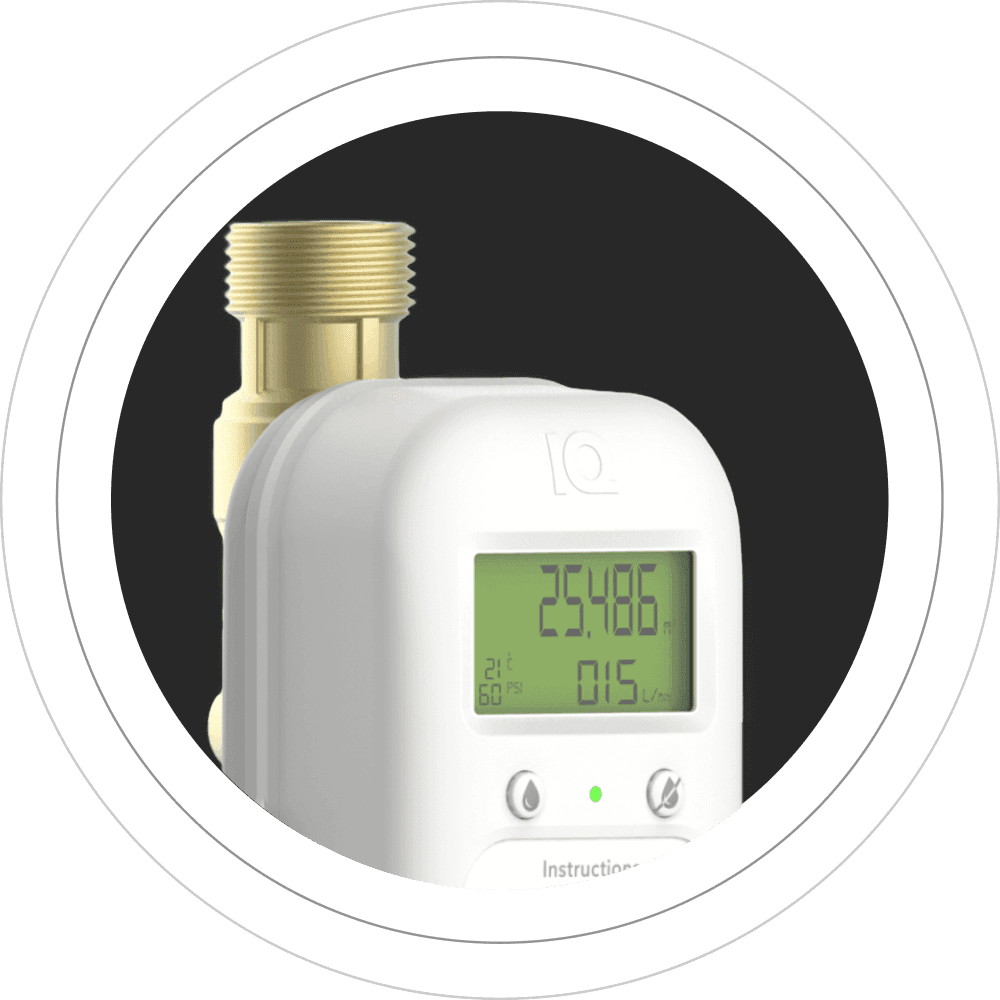
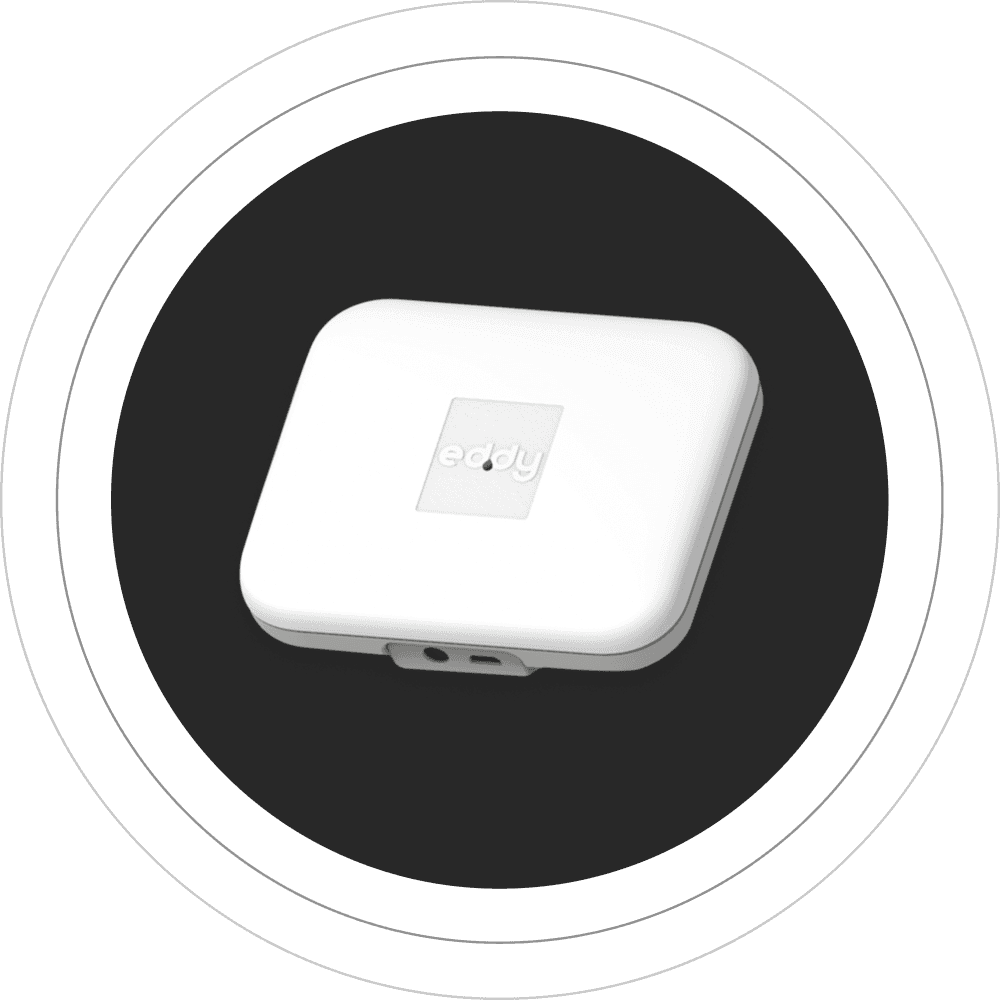
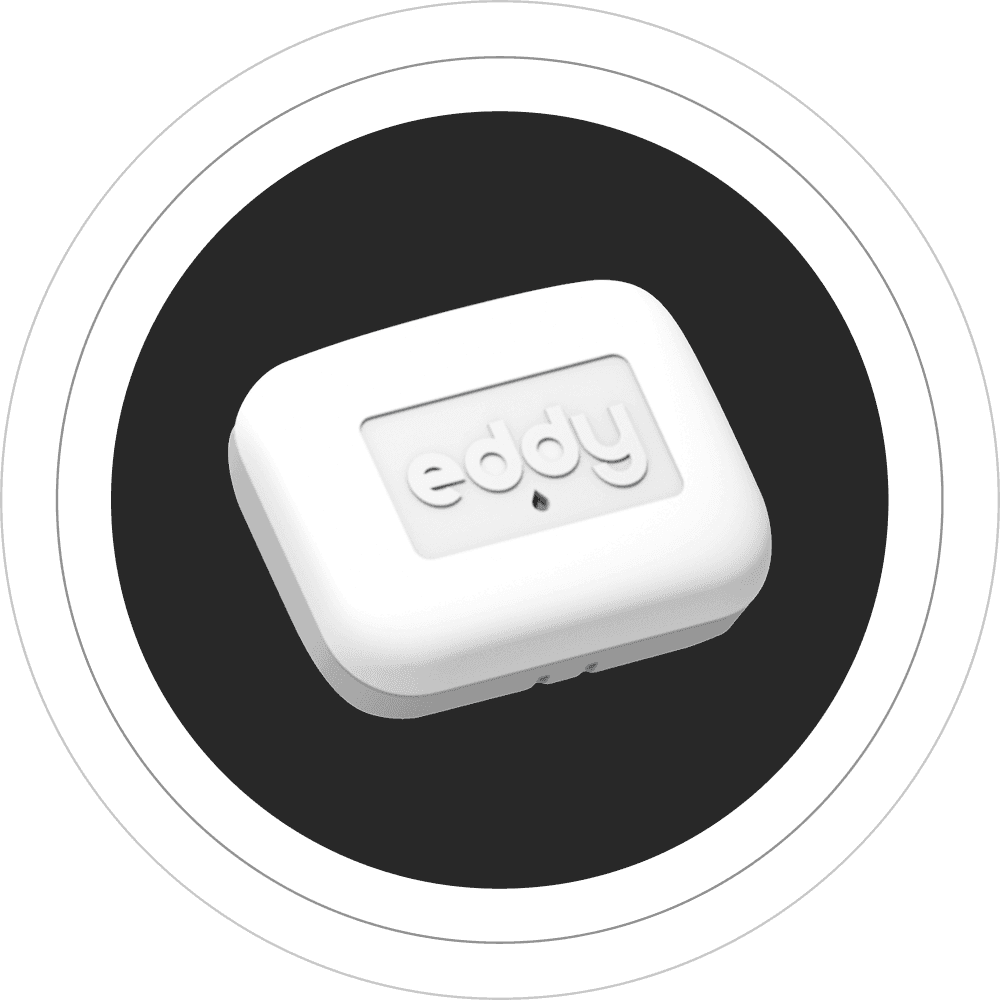
Eddy builds a private LoRaWAN network in every property it protects. Eddy gateways provide the radio backbone for the building, roughly one for every two floors in a tower, and every Eddy device on the water system reports through them. Eddy H2O sensors sit at the points where leaks start. Eddy IQ meters and shutoff valves sit at suite and riser entries. Eddy Link controllers drive the shutoff valves and read the meters on the larger lines, all provisioned and configured by Eddy.
Gateways connect back to the internet over the building's own Ethernet, or over LTE cellular where running cable is impractical, so the water system never depends on tenant Wi-Fi. An alert leaves the device in seconds and reaches Eddy's 24/7 monitoring center, where a trained operator verifies it and works the response with the property's contacts. Interval data from the same network feeds the Eddy Dashboard and, where a building submeters, flows to the billing platform over M-Bus or an API.
Because LoRaWAN is an open standard, the same network can carry other LoRaWAN devices a building adds later, such as temperature or occupancy sensors, without a second radio system.
What LoRaWAN is not
It is not a substitute for a building network. Gateways still need power and an internet connection. It is not instant in the way a wired sensor is: a message takes a second or two to arrive, which is far inside the window that matters for water. And it is not a consumer product. A LoRaWAN deployment is designed, surveyed and maintained, which is why Eddy delivers it as a managed program rather than a box of sensors.
Questions to ask any vendor about their network
Whether the network is private to the building or shared with others. Who owns and maintains the gateways, and who replaces one that fails. Whether coverage was surveyed on site, including mechanical rooms and parking levels. What the battery life is and who changes batteries. And whether the network is open to other LoRaWAN devices or locked to one supplier.
LoRaWAN is not the reason to buy leak detection. Response is. But it is the reason a sensor behind a wall on the 30th floor can report for years without anyone touching it, and that is what makes building-wide protection practical. If you are weighing sensor networks against a building automation system, IoT vs BAS in smart buildings covers where each one fits.
Common questions
Is LoRaWAN the same as LoRa?
No. LoRa is the radio technique that carries the signal. LoRaWAN is the network protocol that decides how devices join a network, how gateways relay their messages and how the data is secured. Eddy devices use both.
Does LoRaWAN need the building's Wi-Fi?
No. Sensors talk to a LoRaWAN gateway on the property over radio. The gateway connects to the internet over the building's Ethernet or over LTE cellular, so tenant Wi-Fi is never part of the chain.
How far does LoRaWAN reach inside a building?
Much farther than Wi-Fi, because the low-frequency signal passes through concrete and steel. In a tower Eddy places roughly one gateway for every two floors and surveys coverage on site, so mechanical rooms, parking levels and elevator pits report as reliably as a suite.
Sources and further reading
Last Updated
Category
Related articles
Browse all posts
Product & technology
IoT vs BAS in smart buildings, and where water risk fits
By Elliott Samuel
Read article
Product & technology
What Eddy's 24/7 monitoring center does
By Adam Bartman
Read article
Water management
Riser rooms and water risers: the vertical spine of your building's water risk
By Adam Bartman
Read article