Riser rooms and water risers: the vertical spine of your building's water risk
Riser rooms carry your building's water risers floor to floor. Why one riser leak becomes damage on many floors and how monitored buildings stop it early.

A riser room is the small locked room, stacked in the same spot on every floor, where your building's vertical water pipes, isolation valves and branch takeoffs live. When a water riser leaks, gravity carries the water down the stack through every floor below it, so one failure becomes damage on many floors at once. That multiplication is expensive: Eddy's 2026 State of Water Risk report benchmarks a riser or HVAC failure in a multi-unit building at $250,000 to $400,000 or more, which is why risers deserve more instrumentation than any other part of the building.
What runs through a riser room
Open a riser room door and you are looking at the building's vertical spine. Domestic water risers carry cold water, hot water and hot water recirculation up the building, with branch takeoffs feeding the suites on each floor. Heating and cooling risers serve the fan coils or radiators on the same stack. In many buildings a fire standpipe shares the core. Around them sit the floor isolation valves, and sometimes pressure reducing valves, that control each level.
Two things make these rooms risky. Everything in them runs under pressure around the clock. And they are locked, unoccupied and rarely entered, so a leak that starts there can run for days before anyone notices.
Why a riser leak multiplies by floor count
A leak inside a suite damages that suite and usually the one below it. A riser leak follows the pipe chase. Water tracks down the riser, exits at slab penetrations and spreads across ceilings floor after floor. A failure near the top of a 20-story stack can put water into a dozen floors or more, and the elevator shafts and electrical closets that share those cores are often in the path. In Eddy's multi-family data, pipes cost more per leak than any other source, at $111,600. The briefing on where water damage starts in multi-family buildings shows how one leak reaches the floors below.
Discovery lag makes it worse. Eddy's 2026 State of Water Risk report found 59% of 2,557 confirmed water events across all building types happened outside business hours, and because riser rooms sit behind locked doors, the first sign is often a resident on a lower floor reporting a stained ceiling many floors below where it began.
Shutoff logic: one floor or the whole riser
When a riser leaks, the first question is what you can actually isolate. Buildings with working floor isolation valves can close one branch and keep water flowing everywhere else. Many older buildings cannot. Valves are seized, buried behind finishes or were never installed, and the only remaining options are shutting the whole riser or the building main. That takes water away from every suite on the stack, and the column above the leak keeps draining through the break even after the valve closes.
This is why valve mapping matters before the emergency, not during it. Knowing which valve controls which floors, and keeping that map current, decides whether a riser leak is a one-hour event or an all-night one.
Aging risers, corrosion and pinhole leaks

Riser stock installed from the 1970s through the 1990s is reaching the end of its service life, and it fails quietly. Copper risers develop pinhole leaks through pitting corrosion driven by water chemistry, and through erosion at elbows and hot water recirculation lines where water moves fast and never stops. Galvanized steel risers corrode from the inside, choking flow before they start weeping at the threads.
A pinhole leak does not flood a hallway. It weeps inside a wall for weeks, feeding mold and soaking insulation, until a stain surfaces somewhere below. By then the repair means drywall, finishes and remediation across multiple suites, not a quick plumbing fix. Repiping a riser stack is a capital project measured in years, which makes continuous monitoring the bridge: Eddy's monitoring center confirms sensor alerts and responds in minutes rather than hours, protecting the building while that plan comes together.
How monitored buildings instrument their risers
Instrumenting risers is straightforward because the geometry is fixed: the same small rooms, stacked floor after floor.
Flow metering per zone. Eddy Link reads meters on the domestic lines and drives the larger valves, so the steady low flow of a hidden riser leak stands out from the building's normal pattern, up to 100x faster than traditional methods.
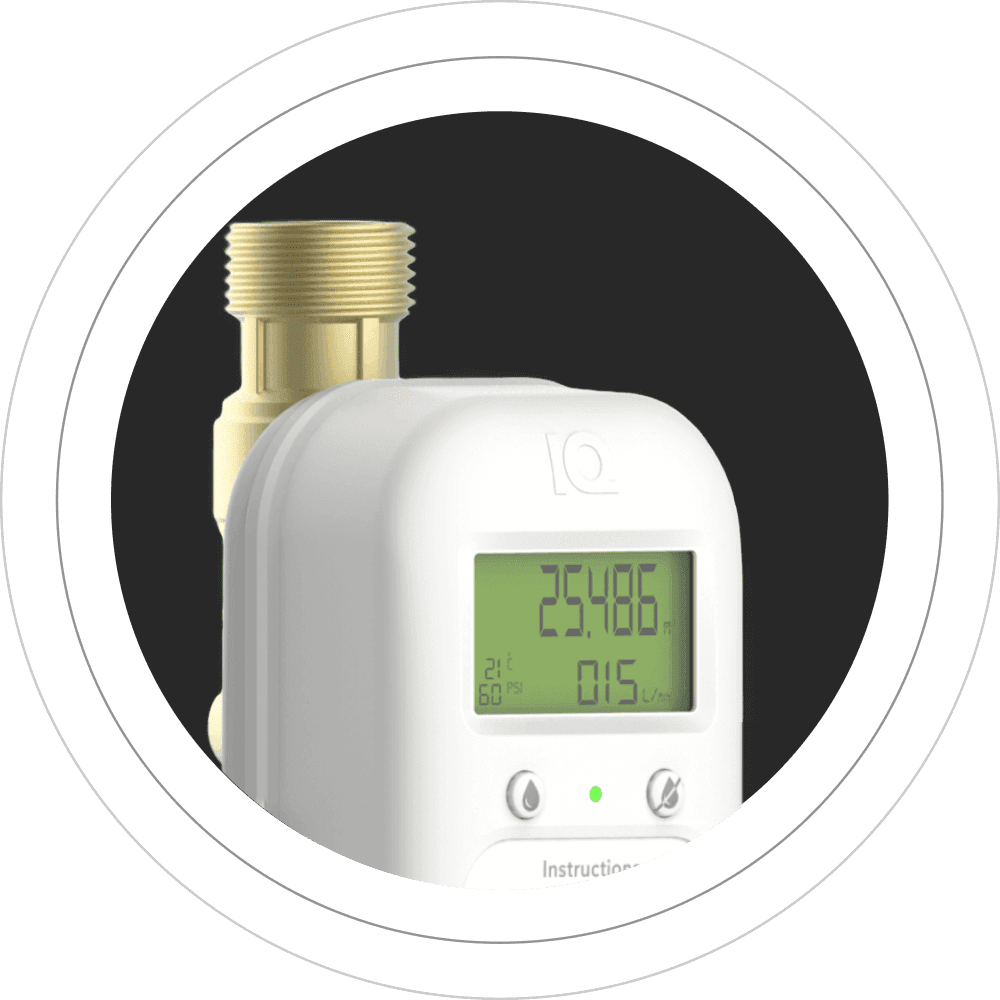
Leak sensors where water lands. Wireless Eddy H2O sensors sit on riser room floors, at valve clusters and in drain pans, while Eddy IQ covers point-of-use connections inside suites. Every device reports into the Eddy Dashboard.
Mapped shutoffs on domestic lines. Because the valves are mapped in advance, automatic shutoff can stop a domestic riser the moment a sensor trips. The monitoring center escalates and calls your contacts within minutes, with operators working from your building's system map and business rules. The benchmark: 02:00 minutes from a leak alert to taking care of the problem. See how detection, shutoff and response fit together on how it works.
For high-rise condos and apartment buildings, risers are also an insurance story. Riser claims drive premiums, and monitored buildings have seen premium savings of up to 20%, with deductible reductions of up to 80% documented at individual properties.
Riser rooms are small. The leaks that start in them are not. Talk to a leak-detection advisor about instrumenting your stack.
Common questions
What is a riser room?
A riser room is a small utility room, usually stacked in the same position on every floor of a building, where the vertical pipes pass through: domestic water risers, heating and cooling risers and often a fire standpipe. It also holds the isolation valves and branch takeoffs that feed each floor. Riser rooms are normally locked and rarely entered, which is why leaks that start in them can run for a long time before anyone notices.
Why are riser leaks so damaging in high-rise buildings?
Gravity turns one leak into many. Water escaping a riser follows the pipe chase and slab penetrations down through every floor below the failure point, so a single leak high in the stack can damage ceilings, walls and electrical rooms on a dozen floors or more. Riser leaks also take longer to discover because riser rooms are locked and unoccupied, and every extra hour adds floors to the claim.
What causes pinhole leaks in copper pipes?
Pinhole leaks come from pitting corrosion inside the pipe, driven by water chemistry, and from erosion at elbows and hot water recirculation lines where water moves fast and constantly. They start as slow weeps hidden inside walls and can run for weeks before a stain shows on a finished surface. Continuous flow monitoring can flag the steady low flow of a hidden leak long before it becomes visible damage.


Last Updated
Category
Related articles
Browse all posts
Water management
Mechanical room leaks: why the building's water hub fails after hours
By Adam Bartman
Read article
Water management
Why water pressure problems become leaks in large buildings
By Adam Bartman
Read article
Water management
Burst and frozen pipes in commercial and multifamily buildings: what the first 10 minutes decide
By Adam Bartman
Read article