Construction site water management: dewatering, temporary water and the wet trades window
What construction dewatering is, why temporary water lines fail on weekends and how monitored sites catch water damage during construction early.

Water management on a construction site comes down to three systems: dewatering that keeps groundwater out of the excavation, temporary water that feeds the wet trades and the permanent systems being energized floor by floor. Most construction water losses come from the second and third, in the window after the building dries in. The sites that avoid those losses are the ones watching water around the clock, with sensor alerts routed to a staffed monitoring center like Eddy's, because nobody lives on a job site to hear it running.
The three water systems on every construction site
Every project manages water in three directions at once. Dewatering moves groundwater and rainwater out. Temporary water service brings water in for concrete, masonry, drywall taping and pressure testing. And as the building tops out, permanent domestic and mechanical systems get charged zone by zone, often while finishes are already going in below. Each system has its own failure mode, its own subcontractor and its own coverage gap when shifts end. A construction water management plan that stops at the excavation misses the two systems that cause most of the damage.
What construction dewatering is and how it fails
Construction dewatering is the continuous removal of groundwater and surface water from an excavation so crews can work in dry, stable conditions. In practice that means sump pumps or wellpoint systems running around the clock, with discharge lines carrying water away to an approved outlet. Dewatering fails quietly. A pump loses power on a Friday night, a discharge line blocks or a float switch sticks, and by Monday the excavation has refilled. The cost is rarely just pumping the water out again. A flooded excavation delays foundation pours, undermines shoring and can force waterproofing to be redone. Because dewatering only works while the pumps do, pump operation is one of the first things monitored on a connected job site.
The temporary water line problem
Temporary water lines are charged, pressurized and largely unwatched. They snake through the site to feed the wet trades, they get moved and re-fitted as work progresses and they serve a building with no occupants. That last part matters more than it sounds. In an occupied tower, a burst line announces itself within minutes because someone hears it. On a construction site, a temporary line fitting that lets go at 6 p.m. on a Friday can run until the first trade arrives Monday morning. Sixty hours of open flow through a 2-inch line is a flooded core, ruined finishes on the floors below and weeks of schedule. Weekends, holidays and overnight hours are when temporary water losses grow from an incident into a claim. Eddy's 2026 State of Water Risk report found 41% of confirmed water events on construction sites happen outside working hours.
The riskiest window: dried in, finishes going in, water live
Building enclosure commissioning proves the shell keeps rain out. The bigger exposure is already inside. Once the building dries in, drywall, millwork, flooring and electrical rooms fill the floors while risers are charged and fixtures are pressure tested above them. Water is now live in a building full of absorbent, expensive material, with no occupants and thin after-hours staffing. The data is blunt: Eddy's 2026 State of Water Risk report found 69.6% of water events on active construction sites are confirmed leaks, nearly three times the rate of occupied buildings. On a job site, an alert is rarely noise. It is usually a live water leak.
Defects, documentation and what monitored sites do differently
Water damage during construction does not end at turnover. Moisture sealed into assemblies surfaces years later as staining, mold and warranty disputes, and water is a recurring driver of construction defect claims. When that happens, the questions are evidentiary: what got wet, when, for how long and who responded. Monitored sites can answer. Every event generates a Leak Incident Report, a time-stamped record of detection, escalation and containment. That record supports a builders risk claim and defends against defect allegations, because the data trail from a monitored event is more valuable than silence from an unmonitored one. Our builders risk guide covers how insurers read that data.
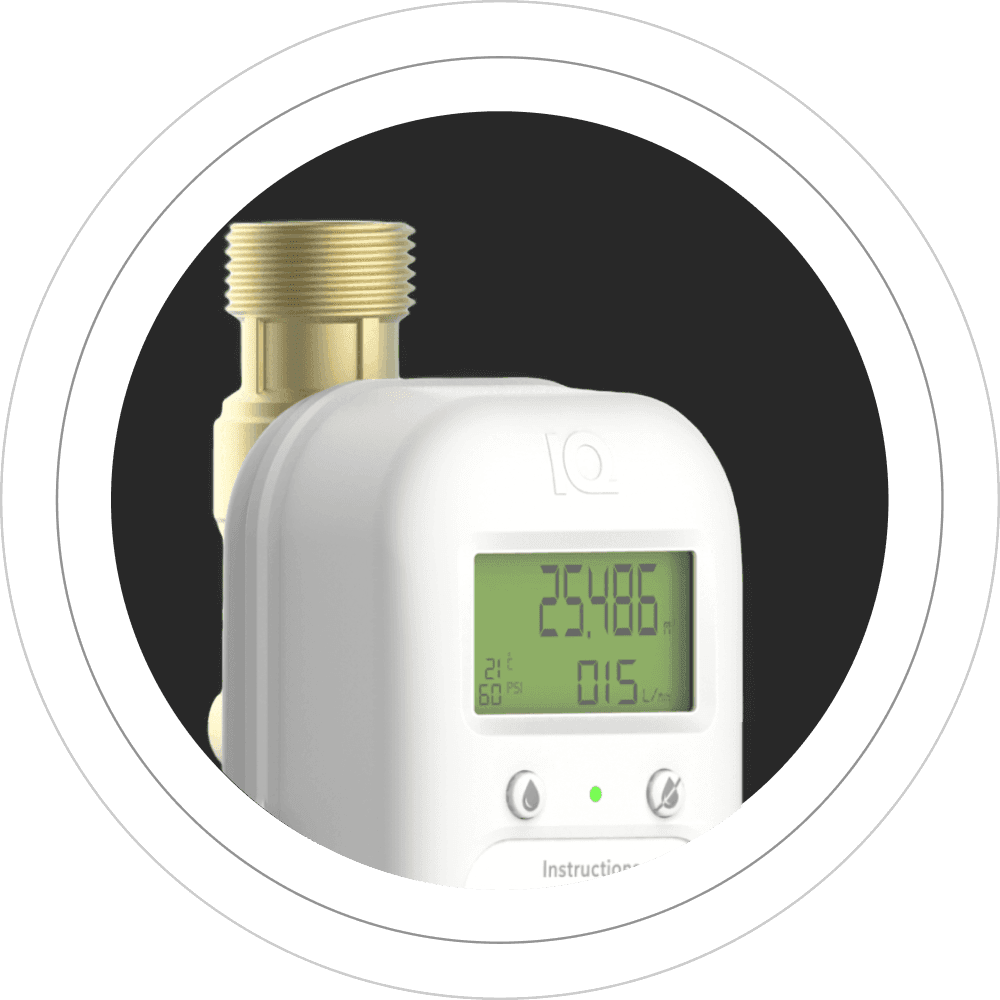
The monitoring itself is straightforward. Eddy H2O wireless leak sensors cover temporary risers, wet areas and mechanical rooms. Eddy IQ units add automatic shutoff on supply lines. Eddy Link reads the site's meters and drives the larger valves, closing them when flow runs outside the site's business rules. The full lineup is on the products page. The monitoring center watches around the clock, and when something trips it escalates and calls the site's contacts within minutes, working from the site's system map and business rules: 02:00 minutes from a leak alert to taking care of the problem. And because this hardware is the building's permanent leak detection system, it carries into operations on day one. The project hands over a protected building, not a punch list item.
If your water management plan ends at the dewatering pumps, the most expensive window of the project is uncovered. Talk to a leak-detection advisor about 24/7 monitoring from excavation through turnover.
Common questions
What is construction dewatering?
Construction dewatering is the removal of groundwater and surface water from an excavation, usually with sump pumps or wellpoint systems that run continuously until below-grade work is complete. It keeps the excavation dry and stable so foundations, shoring and waterproofing can proceed on schedule. When dewatering fails, the excavation refills, which is why monitored construction sites track pump operation around the clock.
Does builders risk insurance cover water damage?
Most builders risk policies cover sudden and accidental water damage, but water deductibles are rising and insurers increasingly expect documented mitigation on the project. Our guide to builders risk and water damage covers what underwriters look for and how monitoring data supports a claim.
When is a construction project most at risk of water damage?
The riskiest window runs from dry-in to turnover, when permanent water systems are charged and pressure tested while finishes fill the floors below. The building is full of absorbent material and nobody occupies it overnight, so leaks run long before anyone notices. That is why 69.6% of water events on active construction sites are confirmed leaks and why monitored sites concentrate sensors and flow monitoring in this phase.


Last Updated
Category
Related articles
Browse all posts
Construction
Water leak protection in construction
By Elliott Samuel
Read article
Construction
The most expensive water gap is between construction and operations
By Elliott Samuel
Read article
Construction
Water leak detection for data centers, from construction through operations
By Adam Bartman
Read article