Eddy vs AlertLabs: A trained operator on the line, not an automated call.
Both detect leaks and can shut off the water. Within minutes of an alert, an Eddy operator calls your team and stays on until the water is off.
150,000+
Active devices in the field across North AmericaAbout EddyUS$98M
Estimated damage prevented across our portfolio in a yearState of Water Risk '26
Trusted by





Where Eddy and AlertLabs differ
| Feature | Eddy | AlertLabs | Why it matters |
|---|---|---|---|
| When a sensor fires | A trained operator calls your team, 24/7 | Automated calls, texts and app alerts to your staff | An alert at 2 AM only helps if someone acts on it. An operator on the phone gets your team moving within minutes. |
| Network | Eddy's own LoRaWAN network on cellular or Ethernet gateways, no building Wi-Fi | Cellular-first, with no building network | The network decides what the system can see. Leaks start in mechanical rooms, risers and concrete cores, where Wi-Fi and cellular signals often fade. |
| Largest shutoff valve | Up to 18 inches with Eddy Link | Up to 6 inches | A burst riser or main needs a valve sized for that pipe. Small valves can only isolate the lines they sit on. |
| Device warranty | 2 years on sensors, 5 on meters, 10 on valves | 1-year limited, extended available | Valves and meters stay in the plumbing for years. The warranty shows how long the maker stands behind them. |
| Record of each event | A Leak Incident Report for every confirmed event | Carrier reporting depends on the integration | At renewal, insurers ask what happened, how fast it was caught and what was done. A report for every event answers all three. |
| Construction | One system from fit-out into occupancy | Strongest in operating buildings | Job sites sit empty after hours with water lines charged. A system that carries on into occupancy protects the building without a second install. |
| Setup and support | A project manager, then a Building Success Manager | Plug-and-play, run by your staff | Someone has to place the sensors, set the alert rules, test the valves and keep the call list current long after go-live. |
| Resident billing | Unit meters feed your submetering company | Usage monitoring for the owner | In rental and condo buildings, the unit meters that watch for leaks can also bill each unit for its own water, through your submetering company. |
| What both have | |||
| Leak sensors | Eddy H2O sensors for water, humidity and temperature | Floodie leak sensors and Humie humidity sensors | Sensors where leaks start, at fixtures, fan coils and risers, find water before it spreads. |
| Flow monitoring | Eddy IQ meters and inline flow meters | Flowie-O, strapped onto the water meter | Flow catches water that never reaches a sensor, like a leak inside a wall or a fixture left running. |
| Automatic shutoff | Eddy IQ and Eddy Link valves, by rule or operator | Shuttie valve, closed when a Floodie detects water | Closing a valve is what stops the damage. An alert alone only reports it. |
AlertLabs details come from its public website, checked October 2026.
Get a protection planWhy choose Eddy over AlertLabs
Both detect leaks. The difference is what happens after the sensor fires.
A staffed monitoring center, not just a platform
The AlertAQ platform places automated calls and alerts for your staff to act on. At Eddy, an operator calls your team within minutes of an alert and stays on until the water is off.
LoRaWAN built for concrete and steel
Eddy runs its own LoRaWAN network on cellular or Ethernet gateways, built to reach concrete cores and mechanical rooms. AlertLabs is cellular-first, with no building network.
Insurance-grade incident documentation
Every confirmed Eddy event closes with a Leak Incident Report. Monitored buildings have documented premium savings of up to 20%, with deductible reductions of up to 80% documented at individual properties, though incentives vary by carrier and building.
Dedicated project management and customer success
A project manager owns commissioning, alert routing and shutoff testing. After go-live, a Building Success Manager stays with the property. AlertLabs is plug-and-play, run by your staff.
After the alert
Catch every leak while it is still small.
Six real leaks from one summer. Each one caught by a sensor, worked by Eddy’s 24/7 Monitoring Center within minutes and closed with a record.
The events and calls are real. Names and locations are hidden on purpose to protect privacy.Real events and calls. Names and places hidden on purpose.
Next city
Cover every city with one Monitoring Center.
After the alert
Know first. Act fast. Keep the record.
Sensors in the right places, a 24/7 Monitoring Center that calls your team within minutes and a record for the file every time.
Get a protection planSix real events after the alert
Keep a morning overflow to one bathroom.
Condo suite, main bathroom. Sensor alert at 7:11 AM, worked by Eddy’s 24/7 Monitoring Center.
- Alert
- A sensor at the bathroom sink gets wet.
- Problem
- A backed-up toilet, water across the floor, the suite below at risk.
- Resolution
- Contained, floor mopped, fans running. Eddy kept monitoring at the building’s request.
- Source
- Backed-up toilet, overflow onto the floor
- Extent
- Floor wet and mopped, fans running, floor damage reported
- Other areas
- Suite below under inspection
- Management aware
- Superintendent attended the suite
- The fix
- Superintendent managing, no plumber yet
- The sensor
- To be verified, concierge told to wipe the sensor and the area
- On scene
- Concierge, superintendent
- Status
- Contained. Monitoring continued at the building’s request
Find a leak in a room nobody visits.
Mechanical penthouse, boiler room. Sensor alert at 8:50 AM, worked by Eddy’s 24/7 Monitoring Center.
- Alert
- A sensor in the boiler room gets wet.
- Problem
- A small leak near the boilers, a puddle of water.
- Resolution
- Concierge and maintenance already on it. Closed on the same call, sensor to be dried and inspected.
- Source
- Small leak near the boilers, exact source not determined on the call
- Extent
- Puddle of water
- Other areas
- None
- Management aware
- Maintenance and building management on scene
- The fix
- Maintenance already working on it
- The sensor
- To be dried and inspected for physical damage
- On scene
- Concierge, maintenance team, building management
- Status
- Closed at the building’s request
Get a burst pipe sorted the same day.
Condo suite, laundry room. Sensor alert at 10:12 AM, worked by Eddy’s 24/7 Monitoring Center.
- Alert
- A sensor behind the washing machine gets wet.
- Problem
- A supply pipe let go. Flowing, not dripping.
- Resolution
- Builder on site, leak sorted the same day. The operator lined up a follow-up call.
- Source
- Washing machine supply pipes
- Extent
- Flowing
- Other areas
- Laundry room
- Management aware
- Yes, building management and the builder
- The fix
- Expected the same day, builder on site
- The sensor
- Still active, still wet
- On scene
- Security desk, builder
- Status
- Sorted the same day, follow-up call set
Limit a flood to one ceiling.
Condo suite, main bathroom. Sensor alert at 10:40 AM, worked by Eddy’s 24/7 Monitoring Center.
- Alert
- A sensor on the bathroom pipes gets wet.
- Problem
- A resident’s bidet flooding the bathroom and coming through the ceiling below.
- Resolution
- Leak stopped, bidet condemned, resident told to remove it. The water reached one other area, the ceiling below.
- Source
- Resident-installed bidet
- Extent
- Flood, now under control
- Other areas
- Ceiling of the suite below
- Management aware
- Yes, superintendent and resident services
- The fix
- Leak stopped, bidet condemned, resident told to remove it
- The sensor
- Removed while the pipes dry, to be reinstalled
- On scene
- Front desk supervisor, superintendent, resident services
- Status
- Closed
Fix a drip before it becomes a puddle.
Office tower, floor kitchen. Sensor alert at 1:27 PM, worked by Eddy’s 24/7 Monitoring Center.
- Alert
- A sensor under the kitchen sink gets wet.
- Problem
- A faucet supply line dripping under the sink.
- Resolution
- Line isolated, plumber called while it was still a drip.
- Source
- Faucet supply line under the kitchen sink
- Extent
- Dripping
- Other areas
- None
- Management aware
- Yes, building security and operations
- The fix
- Isolated, plumber called
- The sensor
- Dried, alert went inactive
- On scene
- Building security
- Status
- Closed
Shut a leak down at night and deal with it in the morning.
Condo suite, kitchen. Sensor alert at 7:17 PM, worked by Eddy’s 24/7 Monitoring Center.
- Alert
- A sensor under the dishwasher gets wet.
- Problem
- A dishwasher line leaking under the cabinet after hours, no maintenance until morning.
- Resolution
- Valves shut the same evening, calls held overnight as the building asked, sensor kept live.
- Source
- Under the kitchen cabinet, dishwasher line
- Extent
- Not confirmed, sensor out of reach
- Other areas
- None reported
- Management aware
- Yes, maintenance via Teams and the property manager
- The fix
- Manual valves shut off that evening, maintenance 9:00 to 10:30 the next morning
- The sensor
- Live until dry, to be dried and inspected in the morning
- On scene
- Concierge
- Status
- Closed. Escalation held until 11 AM, sensor live
Coverage map
Run a leak through the building.
Turn the building to see where each device sits, then run a leak from the sensor to the operator's call.
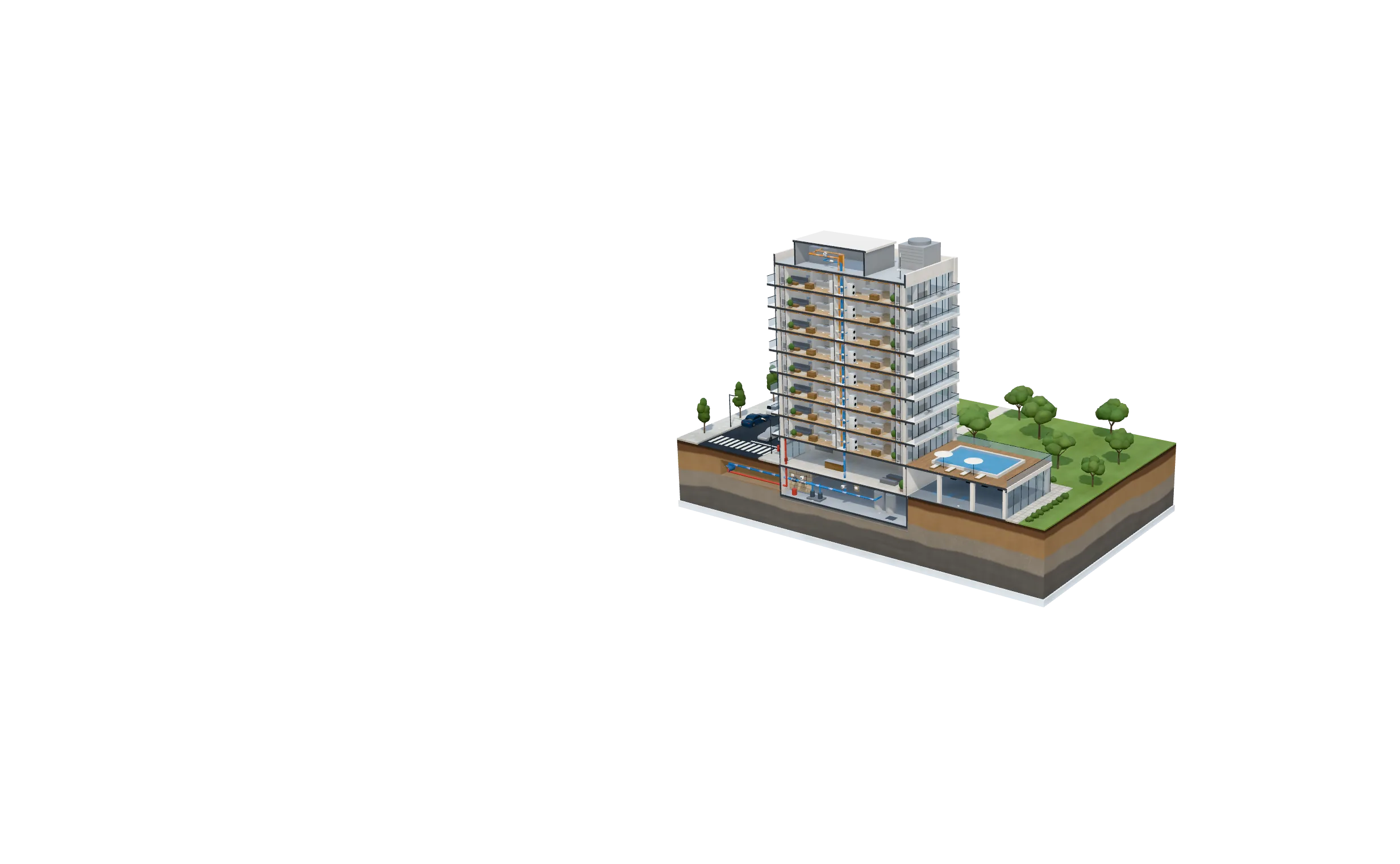
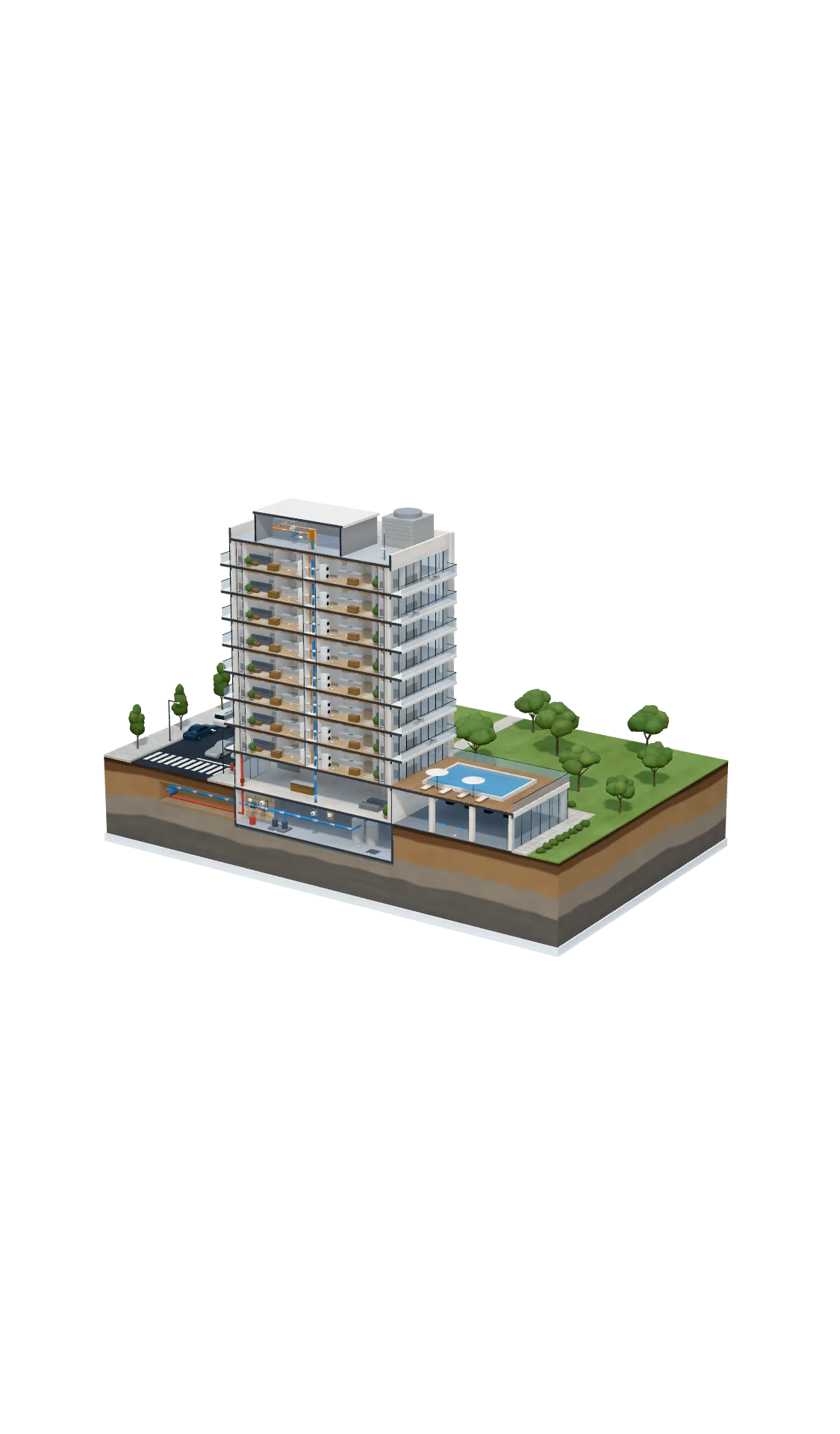
Occupied building · Business hours
Drag to turn the building. Select a label, or run a leak through the system.
The system
Detect, control and respond, in one managed program.
Sensors sit where leaks start and meters watch the flow. Valves close on the rules you set, and a 24/7 monitoring center follows each alert until your team has eyes on it.
3 layers and 16 close-ups in this building
Detect
Two ways to find a leak before it finds a unit.
Sensors sit where leaks start, and meters watch the flow for the leaks no sensor can reach.
8 close-ups · select one to zoom in
Point-of-leak
Flow-based
Control
Valves that close the water before it closes the unit.
Valves close on the rules you set, automatically on a threshold or remotely from the dashboard.
4 close-ups · select one to zoom in
Respond
A live monitoring center that closes the loop.
Alerts go through Eddy's cloud to a 24/7 monitoring center, and an operator calls your team until someone has eyes on the water.
4 close-ups · select one to zoom in
What happens in a leak, step by step
- A washing machine supply hose bursts in a suite upstairs.
- Eddy H2O under the washer detects water and sends the alert over LoRaWAN.
- The building's gateway relays it. Your team and the 24/7 monitoring center are alerted at the same time.
- A shutoff rule closes the suite's Eddy IQ valve. The water stops at the source.
- Within minutes, an operator calls your on-site team through the escalation protocol.
Automatic shutoff is configured per building. Some sites use operator-coordinated isolation instead.
Already on AlertLabs?
Eddy runs one program on its own network, so most buildings switch at renewal or during a capital project. We'll review your setup and show what would change.
Eddy vs AlertLabs: common questions
Does AlertLabs have a 24/7 monitoring center?
Not a staffed one. The AlertAQ platform places 24/7 automated calls and alerts, and your staff act on them. At Eddy, an operator at the 24/7 monitoring center calls your team within minutes of an alert.
What happens when an alert fires at 2 AM?
Where a valve is set to close on a leak, it shuts off the water first. Then an Eddy operator calls your on-call contact within minutes and stays on until it's handled. AlertLabs places an automated call to your staff, so the response starts when someone answers.
Does Eddy need building Wi-Fi?
No. Eddy runs its own LoRaWAN network on cellular or Ethernet gateways, so it never relies on building Wi-Fi. LoRaWAN reaches through concrete cores and mechanical rooms, with about one gateway every two floors in a tower. AlertLabs doesn't use building Wi-Fi either, because its devices connect over cellular.
Can Eddy help with our insurance?
Yes. Every confirmed event closes with a Leak Incident Report, documentation your carrier can use at renewal. Monitored buildings have documented premium savings of up to 20%, with deductible reductions of up to 80% documented at individual properties, though incentives vary by carrier and building.
Can Eddy protect a building during construction?
Yes. Eddy protects buildings from fit-out into occupancy. Sensors watch temporary risers and mechanical rooms, and valves can close a line after hours. The same hardware and monitoring center carry on after handover. PCL Construction builds with Eddy across Canada and the US.
How much does AlertLabs cost compared to Eddy?
It depends on the building's size, the level of protection and the valves it needs. AlertLabs quotes each building and doesn't publish prices. Eddy prices the hardware, the 24/7 monitoring center, project management and incident reporting as one managed service. Share their quote and we'll show what Eddy would add.
Is AlertLabs a better fit for some buildings?
Yes. In low-rise buildings where install speed matters most and staff can act on every alert, AlertLabs is a strong choice. Eddy is built for towers, portfolios, construction and institutions, where an operator needs to call your team within minutes.