Eddy vs ZoJacks
Eddy vs ZoJacks: which leak detection system is right for your building?
ZoJacks's hub-based topology works well in line-of-sight spaces. Eddy's LoRaWAN network, in-house monitoring center and dedicated project management are built for the rest of the building.
Why choose Eddy over ZoJacks
Speed of detection matters less than what happens next.
An in-house monitoring center, not a claim
Eddy's monitoring center is staffed 24/7 by operators trained on each building's runbook. They call your team minutes after the alert.
LoRaWAN, not hub-based wireless
ZoJacks runs on a hub topology with WiFi/Ethernet/SIM connectivity. Eddy uses LoRaWAN, a long-range protocol that penetrates concrete cores and mechanical rooms.
Dedicated project management
Every Eddy deployment ships with a project manager. Commissioning, alert routing and shutoff verification are part of the program, not a checklist for the building staff.
Coverage map
Built for the whole building, with people on every alert.
ZoJacks's hub-based network works well in line-of-sight spaces. Eddy's LoRaWAN is built for the rest of the building, and its in-house monitoring center follows every alert. Run a leak to see the response.
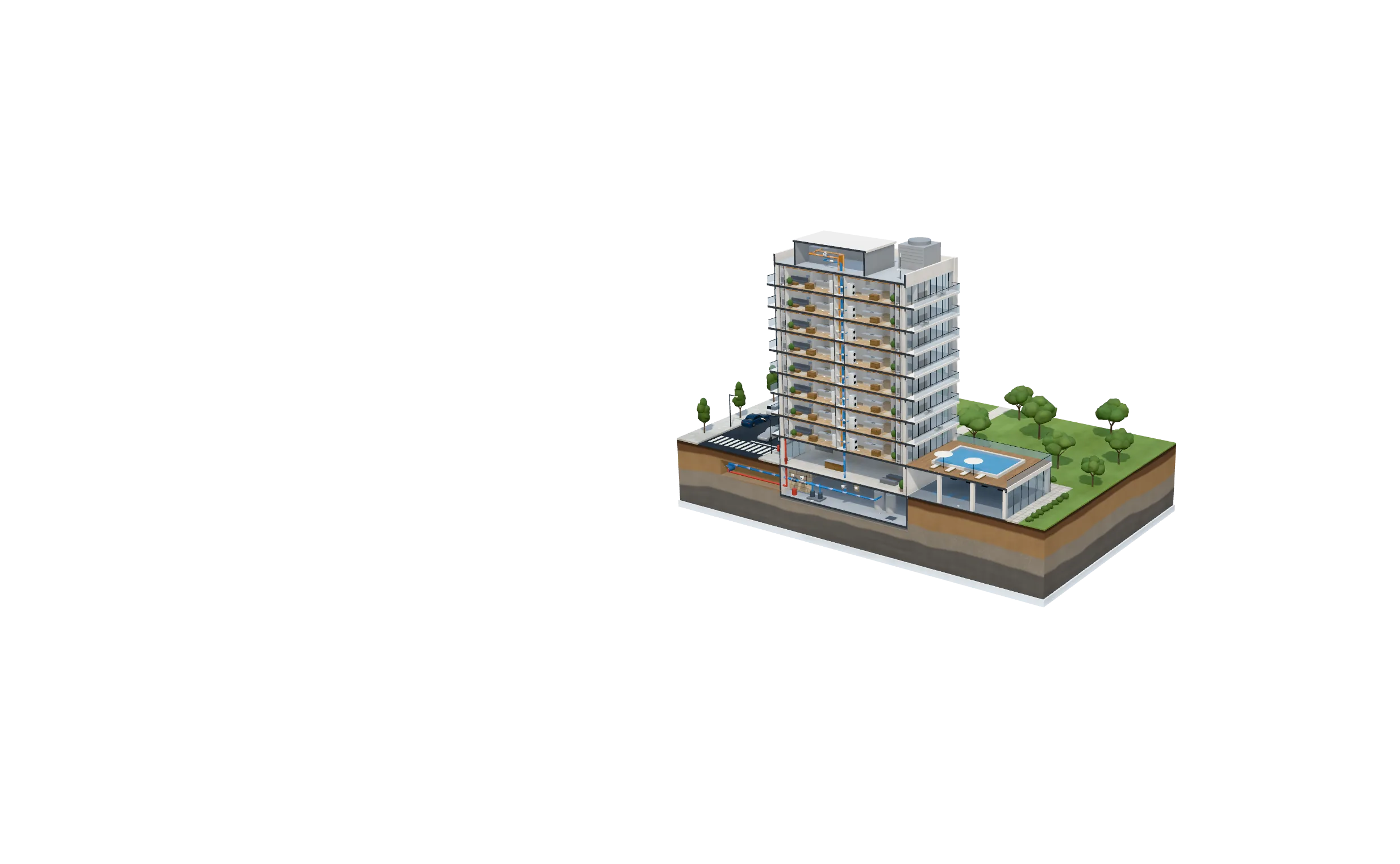
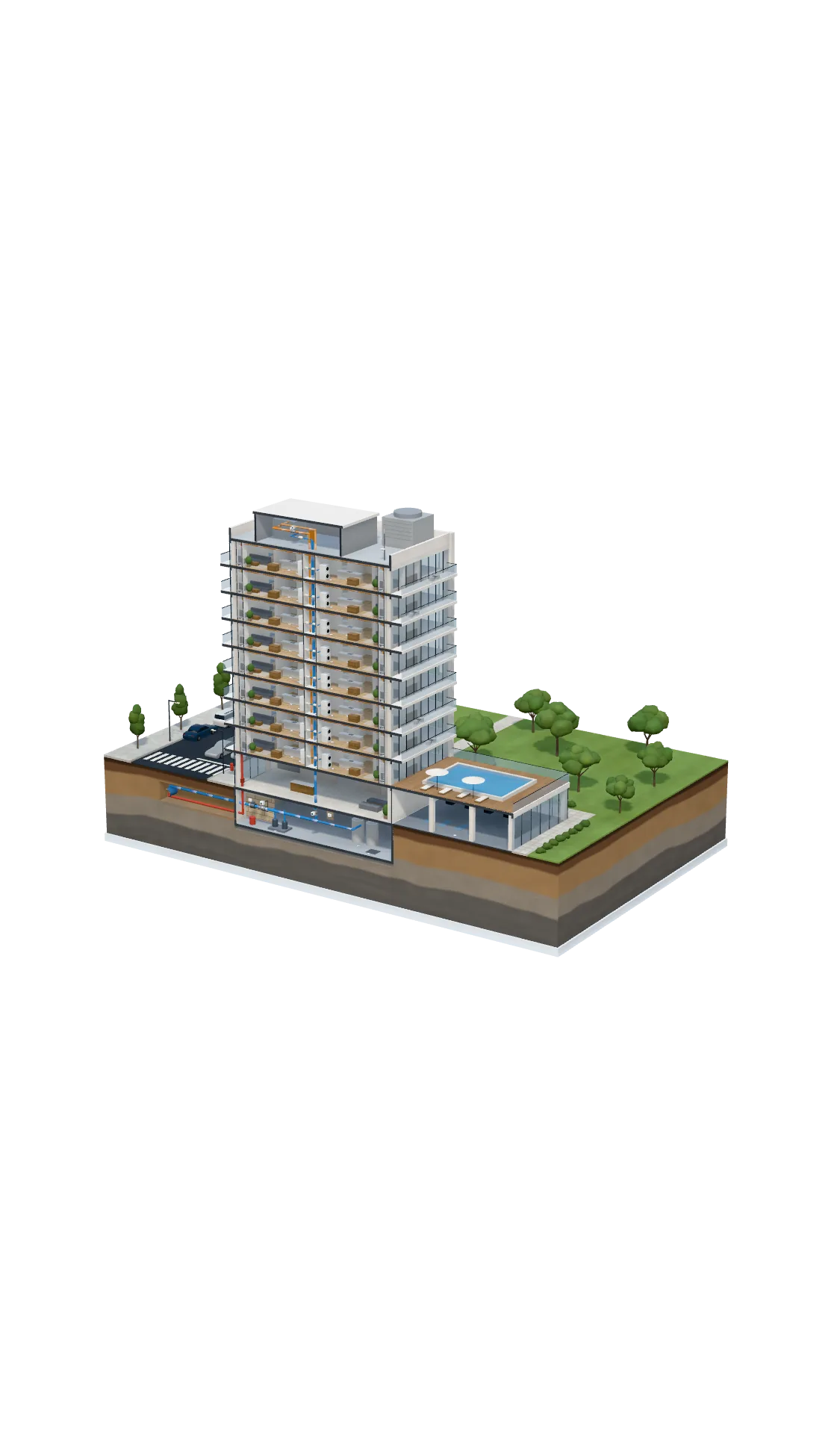
Occupied building · Business hours
Drag to turn the building. Select a label, or run a leak through the system.
The system
Detect, control and respond, in one managed program.
Sensors sit where leaks start and meters watch the flow. Valves close on the rules you set, and a 24/7 monitoring center follows each alert until your team has eyes on it.
3 layers and 16 close-ups in this building
Detect
Two ways to find a leak before it finds a unit.
Sensors sit where leaks start, and meters watch the flow for the leaks no sensor can reach.
8 close-ups · select one to zoom in
Point-of-leak
Flow-based
Control
Valves that close the water before it closes the unit.
Valves close on the rules you set, automatically on a threshold or remotely from the dashboard.
4 close-ups · select one to zoom in
Respond
A live monitoring center that closes the loop.
Alerts go through Eddy's cloud to a 24/7 monitoring center, and an operator calls your team until someone has eyes on the water.
4 close-ups · select one to zoom in
What happens in a leak, step by step
- A washing machine supply hose bursts in a suite upstairs.
- Eddy H2O under the washer detects water and sends the alert over LoRaWAN.
- The building's gateway relays it. Your team and the 24/7 monitoring center are alerted at the same time.
- A shutoff rule closes the suite's Eddy IQ valve. The water stops at the source.
- An operator confirms the alert and calls your on-site team through the escalation protocol.
Automatic shutoff is configured per building. Some sites use operator-coordinated isolation instead.
More about Respond
Eddy's 24/7 monitoring center confirms every alert, escalates per your contact list and stays on the line until the water is off and the on-site team has eyes on it.
- Configurable automation rules per zone and time of day
- Trained operators on duty 24/7
- Escalation: automation → property manager → emergency contact, on your list
- Submetering and consumption data for billing, conservation and ESG reporting
Behind each close-up
- AUTOMATION: Configurable rules per zone & time-of-day · Eddy Dashboard
- LIVE OPERATORS: Trained humans, every event · Monitoring center
- ESCALATION: Per-contact-list escalation · Your team
- SUBMETERING: Per-unit billing & conservation reporting · Eddy IQ
Eddy vs ZoJacks: feature by feature
Detection speed is a number. Response, network and accountability are the system.
24/7 monitoring center
Eddy
In-house monitoring center; live operators support every alert.
ZoJacks
Offers UL-listed Five Diamond central-station monitoring for about $15 per month. That is alarm-industry monitoring, not a water-domain team working from your building's system map.
Why it matters: The right comparison is who picks up the phone at 2 AM, not whether the marketing page says 24/7.
Network protocol
Eddy
LoRaWAN, long-range wireless engineered for concrete and steel.
ZoJacks
Hub and sensors on a cellular network, marketed as independent of building WiFi.
Why it matters: Hub topologies require line-of-sight or repeaters; LoRaWAN penetrates concrete cores and mechanical rooms.
Dedicated project manager
Eddy
Each deployment ships with a project manager for commissioning, alert routing and shutoff verification.
ZoJacks
Self-serve installation and commissioning model.
Why it matters: Install-and-hope is not a strategy. Eddy ships with a managed program from day one.
Documented insurance outcomes
Eddy
Premium savings of up to 20%, with deductible reductions of up to 80% documented at individual properties documented; Aon whitepaper independently validates the model.
ZoJacks
Limited documented insurance outcomes.
Why it matters: Underwriters reward structured mitigation evidence with premium and deductible reductions.
Sensor ecosystem
Eddy
Humidity, temperature and water-presence sensors plus rope and probe attachments; common-area, in-suite and mechanical-room coverage.
ZoJacks
Wireless sensors plus air quality sensors and range extenders; WaterStop shutoff valve.
Why it matters: Both vendors get sensors where they need to be. Eddy's coverage list maps to insurer Coverage & System Design checklists.
Track record at scale
Eddy
150,000+ active devices, $98M (USD) prevented in 2025, named multi-asset case studies.
ZoJacks
Early-stage with a light public track record and limited documented deployments at scale.
Why it matters: Risk managers reward documented track records, especially in multifamily where claim severity is high.
Per-unit submetering and resident billing
Eddy
Eddy IQ M-Bus meters and unit smart sub-metering capture unit-level consumption and feed your submetering company by M-Bus or API for usage-based resident billing, on the same network that runs leak detection, shutoff and a staffed 24/7 monitoring center.
ZoJacks
Leak detection and shutoff; the app tracks whole-system water usage for conservation goals, not certified per-unit consumption for usage-based resident billing.
Why it matters: In multifamily and condos, a metering layer that also feeds resident billing turns the same install into a cost-recovery tool, not just leak protection.
Talk to a leak-detection advisor about your building
If you are evaluating ZoJacks for a portfolio, the Eddy team can walk through where the network, response and reporting layers change the math.
Talk to a leak-detection advisorGetting started is easy
Eddy connects detection, response and reporting in one place, with one team.
Build your system
Tell us about your building and get a customized leak protection recommendation in minutes.
Build your systemTalk to our team
Walk through the differences with a specialist tailored to your property type, construction stage and insurance requirements.
Talk to a leak-detection advisorFAQ
How is Eddy different from ZoJacks?
ZoJacks runs on a hub-based wireless topology and emphasizes detection speed. Eddy runs on LoRaWAN engineered for concrete cores, ships with a dedicated project manager and operates an in-house 24/7 monitoring center that calls your team after every alert.
Does network protocol really matter?
Yes, in real buildings. Hub-based wireless and WiFi rely on line-of-sight or repeater chains. LoRaWAN's 915 MHz long-range protocol penetrates concrete cores and steel decks where hub radios drop out.
One Eddy gateway typically covers two floors of a high-rise. Hub topologies in the same building usually require multiple repeaters and dead-zone surveys.
What insurance documentation does Eddy provide?
Automated uptime, incident and response-time reports. Operators have used the documentation to drive premium savings of up to 20%, with deductible reductions of up to 80% documented at individual properties.
What does Eddy cost compared to ZoJacks?
Eddy bundles hardware, the monitoring center, dedicated project management and insurance-grade reporting into a single managed-service relationship.
The right comparison is total cost of risk, not unit price. Talk to the Eddy team for a tailored quote against your portfolio.
More comparisons
See how Eddy compares with other systems.
Detection method, response chain, network protocol and insurance reporting, side by side.
All comparisons- Eddy vs Wint
- Eddy vs AlertLabs
- Eddy vs BrickEye
- Eddy vs ProSentry
- Eddy vs Aware Buildings
- Eddy vs Kairos Water
- Eddy vs Pipe Burst Pro
- Eddy vs LIKK Technologies